Thursday, July 10, 2014

The Taliban: Afghanistan’s Most Lethal Insurgent


For Westerners, Afghanistan has always been distant, exotic, and periodically threatening. In the Occident, the Afghan warrior tradition enjoys well-earned respect. Many countries have invaded Afghanistan, but few have controlled it for long. In the 19th century, the British conquered, then were defeated, then conquered again, and then left Afghanistan. The Soviets had an equally checkered relationship with Afghanistan and, like the British before them, were defeated.  

Afghans, too, suffered the wages of war. In the late 20th century, the Soviets carpet bombed villages and valleys, killing over 1 million Afghans and dispersing many millions more into squalid, disease-ridden refugee shanties. After the Soviet invasion, the always-fragile traditional economy collapsed, plunging Afghans into destitution, fatalism, and despair.

For more than 12 years, the United States has been at war in Afghanistan. Events surrounding that country provoke controversy. An American soldier captured by the Taliban under questionable circumstances was recently traded for elite Afghan insurgents. Will this prolong the insurgency, will it shorten it, or will it have no consequence? This is uncertain. But what is certain is that Afghanistan serves as a grand laboratory of military and economic developmental polices. Lessons drawn from counterinsurgency successes and failures guide American policies in some of the most desperately poor nations of the world. This is a battle of wills.The Taliban’s goal of reestablishing Islamic law, or Sharia, is common to many Islamic organizations, both militant as well as those who proclaim themselves peaceful. The use of insurgency is one tactic to achieve the world domination of Islam. Militant Islam is expressed through different means and media. For this reason, it is a battle of ideas, as well as bullets. It is being waged through the Internet, in mosques, and in religious schools, or madrassas, as well as on the fields of battle in Afghanistan.

The Taliban offer an unrelenting dedication to conquer Afghanistan, an unconstrained use of terror, and solidarity with important fragments of global Islam. The Taliban leverage deeply ingrained Afghan skepticism of Western promises for a better future. Foreign men have come and gone from Afghanistan, and, despite promises, only the poverty remains. Taliban leaders boast that Afghans are armed with the religious fervor, honor, and resolve. “Such weapons are neither available in the arsenal of America nor in the warehouse of her allies.”[1] In January 2013, the Taliban crowed, “No sooner will the foreigners quit than the Afghans will start living under the cover of an Islamic government and in the environment of Islamic brotherhood.” 

The American-led Coalition is determined to prevent the Taliban’s triumph. Today’s soldiers on both sides of the struggle have lived only in wartime. The sons of Taliban fighters, who were 10 when the group was scattered into Pakistan, are now in their early 20s. Many are hardened fighters and will, undoubtedly, face the sons of the Northern Alliance. The Taliban are tough, but so are many other Afghans.

As the book The Taliban: Afghanistan’s Most Lethal Insurgents comes to publication, U.S. forces are scheduled to leave, and the Taliban will certainly try to fill the security vacuum. Thirteen years of building a civil service, army, police, and health and educational system will be put to the test. The extent to which Afghanistan’s fortunes are intertwined with or independent of American military will be decided. Will the Taliban’s power-sharing negotiations become a viper’s embrace of the still-struggling Karzai regime? Can the Karzai regime stand on its own to meet the Taliban challenge? The stakes are survival for the new Afghan state.


Mark Silinsky is a 30-year veteran of the defense intelligence community. He has served as a senior counterinsurgency advisor and counterintelligence analyst in the United States and in Afghanistan. He graduated Phi Beta Kappa from the University of Southern California; earned a master's degree from Oxford University; and is a graduate of the Naval War College, the National Defense University, and the National Intelligence University.


[1] Statement of the Islamic Emirate on the Tenth Anniversary of 9/11, Afghan Forums, Accessed July 1, 2014, http://www.afghanforums.com/showthread.php?23426-Statement-of-the-Islamic-Emirate-on-the-Tenth-Anniversary-of-9-11-you-must-read-it-)

Friday, June 6, 2014

The Enduring Relevancy of Nation-States in International Politics: The Case of China

We are well in to the second decade of the 21st century and may observe the contemporary security challenges in global politics. The international environment is fraught with transnational threats, from national disasters to infectious diseases, politically-motivated organized violence to technologically-sophisticated cross border threats. It is difficult to look with optimism at the 21st-century international security situation. It may be even more difficult to prepare for it.

But, there remains a crucial element of international politics and the insecurity therein—whatever the time period—that is known, namely, the preeminent role of nation-states. Understanding the interests and objectives of a nation-state, its intentions and objectives as well as its capabilities, plans, and operations, prepares us for the most daunting challenges of the 21st century.

Indeed, nearly every day in newspapers around the world we read about one nation-state in particular, China. Asia to Africa, the Middle East to the Americas, the activities, products, and services of China and its state-owned enterprises and citizens fill the headlines of business and economic news headlines. Moreover, politically, China is making its presence known throughout the world, well beyond its borders.

Is this all by design? Does China have a strategy in place to effect international politics? Current events give us a glimpse, perhaps, of China’s strategic intentions. For example, from May 20-21, 2014, China hosted the fourth summit of the Conference on Interaction and Confidence-Building Measures in Asia (CICA) in Shanghai, taking over the chairmanship for two years. On the sidelines of CICA, China and Russia signed agreements for Russia to supply China with natural gas for 30 years to help fuel the economic development of both nation-states, but especially China. Worth an estimated $400 billion, China is developing closer strategic ties to Russia; however, for what purpose? How do China and Russia envision international politics in the 21st century?

Within its own borders, meanwhile, China is facing daunting economic as well as social challenges. Recent events reveal problems at home. In the predominantly-Muslim region of Xinjiang, multiple attacks on May 22, 2014 killed dozens and injured nearly 100 Chinese citizens in the city of Urumqi. The central government in Beijing blamed ethnic Muslims, locally known as Uighurs, and labeled them as terrorists. To what extent will security challenges like this affect Chinese policies, domestic and foreign? How will China address its internal challenges in the face of external events, both regionally and beyond?

In fact, this is the traditional strategic tension for China, managing relations within and outside of its own borders. To understand recent events such as the CICA summit, the Sino-Russian gas deal, or the attacks in Urumqi, one needs a foundational understanding of the strategic aspects of China.

In China, as elsewhere in Asia, history plays a vitally important role in political affairs, domestic and international. Edited by Donovan C. Chau and Thomas M. Kane, China and International Security devotes an entire volume comprising 13 chapters to understanding the strategic history and relationships of China. From dynastic to modern times, China’s history has much to inform us about its strategic intentions and plans, including in international politics today.

To capture a sense of the internal debates and challenges of China, the second volume of China and International Security focuses on Chinese national security, also in 13 chapters. We learn that China’s Muslim minority is but one example of the strategic tensions within China. Areas challenging China internally include its demographics and Communist Party as well as its views of human rights and the international security environment.

Taken together, these two volumes, one historical and another inwardly focused, provide the strategic framework for better comprehending China’s contemporary security challenges, which is the focus of volume three, comprising 15 chapters. From regional to international strategies, China is exhibiting purposeful plans and relationships to further Chinese strategic interests. While the character of these interests may be debated, what is clear is that China has national interests, and it is attempting to promote and preserve them. Thus, the role of nation-states in international politics is revealed.

China will have a profound influence on the 21st-century world. What happens in China will have political, economic, and, therefore, strategic effects beyond its borders. What China does, near and far—that is, how China behaves—will also impact politics, regionally and internationally. To prepare strategically for the 21st century, we must look to the past and within China as well as examine its regional and international strategies; this is the purpose and utility of China and International Security.


Donovan C. Chau, PhD, is associate professor of political science at California State University, San Bernardino. Educated at Claremont McKenna College, Missouri State University, and the University of Reading, his teaching and research focus on international politics, particularly in Asia and Africa. He has written book chapters, journal articles, monographs, and two books, including Exploiting Africa: The Influence of Maoist China in Algeria, Ghana, and Tanzania.

Thomas M. Kane, PhD, is senior lecturer at the University of Hull, specializing in strategic studies and international relations with a particular interest in East Asia. His published works include Chinese Grand Strategy and Maritime Power and Ancient China on Postmodern War. His book Strategy: Key Thinkers includes substantial material on ancient and 20th-century Chinese military thought.

Friday, April 11, 2014

North Korean Human Rights Concerns and Its Challenges

North Korea draws the world’s attention for its many idiosyncrasies: The Korean peninsula remains the last Cold War frontier with the Communist North and the capitalist South still at a war; the Democratic Peoples Republic of Korea is one of the poorest nations, yet one of the proudest; it is one of the most sanctioned states, yet one of the most defiant; it is one of the weakest, yet one of the most resilient. This paradox sums up its presence in the world community.

As the globalization process unfolds, human rights concerns have emerged as a major variable in international interactions. The fashionable buzz words such as human security, humanitarian intervention, life security, and securitization of non-traditional security issues point to a gradual shift of focus from Hobbesian guns-and-bullets paradigm to Kantian moral-ethical interests. The general trend in Northeast Asia is, though, still preoccupied with national security priority over human rights protection. Here we have the North Korean problem confabulated with nuclear threats and human rights abuses.

The summary execution of Jang Sung-taek, the current North Korean leader Kim Jung-un’s relative and patron, on December 12, 2013 alerted to the systematic human rights violations which did not evade the highest echelon of Pyongyang’s ruling strata. It took only four days for the regime to execute Jang since his arrest on December 8 of that year. The expeditious execution implies the denial of defendant’s rights to attorney and total dismissal of legally stipulated procedures. This high profile case supports the existing testimonies of North Korean refugees on the arbitrary and summary executions in the totalitarian regime.

North Korea acknowledges universality of human rights, while advocating “socialist democracy” and “our theory of human rights.” The contradictions lie in the obvious gap between rhetorical claims as stated in the DPRK Constitution and empirical reality as testified by the refugees. One of the challenges in North Korean human rights lies with the fact that the Pyongyang regime is the violator as well as the potential protector of the rights. The concerned parties of international community, therefore, have to tread the precarious waters in inducing the North Korean government’s cooperation to abide by rule of law, while trying not further push it to a self-isolating, defensive corner.

Making it more challenging, North Korea sees human rights not as a norm to protect, but a politically motivated pressure tool. The regime calls for self-vigilance in facing the criticisms raised and voiced by the international community. The Pyongyang leadership dismisses the concerned voices of the “imperial powers” as unjustifiable interference into domestic affairs. North Korea’s self-perception as the weak surrounded by the hostile and powerful nations makes it ever more conscious of slight belittlement, imagined or real, of its sovereignty. The human rights violations add more complexity to the existing ‘North Korean problem’ where its primary concern lies with nuclear capability.

Pyongyang’s aversion to the human rights discourse originates from two primary reasons: overriding prerogatives to maintain a domestic ruling hierarchy and the suspicions towards Western-centric rights discourse. The world order perceived by North Korea derives from a struggle between the imperialists and the subjugated. The two exemplary imperialist countries in their perception are the U.S. and Japan, whilst member nations of the opposing camp which they identify with include Cuba, Egypt, and Indonesia. This simple dichotomy of ‘with us vs. against us’ are often demonstrated at the United Nations Human Rights Council sessions. On March 25, 2010, for example, North Korea refused to accept the Council’s final resolution by stating that it will either “take note of” or “reject” the 117 recommendations. 

The advancement of human rights is a noble enterprise. As democracy aims to amend the unequal distribution of power, universal rights is to respect the innate humanity of all regardless of external attributes. Human rights discourse in this regard can be both empowering and potentially subversive. The tension between heightened awareness and the tenacity of ancient regime explains one of the challenges of the 21st-century global society where North Korea raises concerns for its unique challenges.

 
http://www.abc-clio.com/product.aspx?isbn=9780313364075


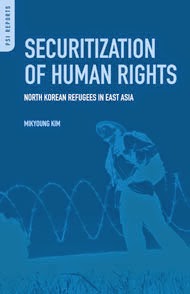
Mikyoung Kim is Associate Professor at Hiroshima City University-Hiroshima. She was a Fulbright visiting professor at Portland State University, OR, and served with the U.S. State Department at the U.S. Embassy in Seoul, Korea, as a public diplomacy specialist. She has published many articles on memory, human rights, and gender in Northeast Asia, and is the author of Securitization of Human Rights:North Korean Refugees in East Asia (Praeger Security International, 2012).

Monday, March 17, 2014

Ukrainian Crisis & Its Implications


The crisis in Ukraine began with former President Yanukovych refusing to sign a trade agreement with the European Union (EU). This refusal was met with an outcry by the Ukrainian people. Signing this agreement would have helped progress Ukraine economically and politically, whereas refusing to sign it demonstrated Yanukovych’s alliance with Russia. More than 100,000 people poured into the streets of Kiev to protest Yanukovych. These protests were met with extreme violence leading in the deaths of more than 80 protestors over three months. In December, Russia and Ukraine reached a deal under Yanukovych in which Russia agreed to send $15 billion in aid to the country through significant discounts on oil that would help Ukraine with its debt crisis, saving it from defaulting. This only caused further unease with the Ukrainian people, who already view Russia as having too much influence over their country. On February 22, Yanukovych was voted out of his post as president of Ukraine and an interim government was put in place.

The divide between Russian-speaking eastern and Ukrainian-speaking western parts of Ukraine runs deep within the inhabitants of these regions who hold ties to different nations. As a former Soviet state, many ethnic Russians reside in Ukraine, specifically in the Crimea region whose population primarily consists of ethnic Russians.  Additionally, Russia’s largest naval base outside of its borders is located in Sevastopol, a port in Crimea. This past week Russia dispersed troops into Crimea, seizing control of the region in a move that Ukrainian nationalists and members of the international community are terming as an invasion of sovereign Ukrainian territory, and therefore a potential violation of international law. At present, the United States and the EU are urging Putin to withdraw his troops to their former posts within the territory, a move that Putin is refusing. The United States and members of the EU are threatening economic sanctions against Russia if it does not comply with this request.

The implications of this conflict reach far and wide. Where the United States and Russia certainly do not need more tension between one another, the United States is facing another struggle: its demonstration of power in the international community. There is a question regarding whether the United States flexing its muscles in the face of Russia is enough to cause Putin to back down. His moves currently suggest the United States does not have the necessary political leverage over Russia.

Continuing on the path that Putin has begun could create problems for Russia. In addition to the sanctions proposed by the United States and the EU, the stock market took a hard hit this week, dropping the value of Russian and Ukrainian currencies. Putin has stated that his primary emphasis is to keep ethnic Russians within Ukraine protected, but Ukrainians and others in the international community question this motive. While this might be his public reasoning for taking control of Crimea, many believe that his interests lie more in an attempt to make a power play over a former Soviet state.

Talks that have taken place this week in Paris regarding the crisis made it clear that Putin does not view the interim government as having legitimacy. In response to the pro-West groups that took over Kiev, Pro-Russian groups took power over the legislature of Crimea and have declared that there will be a vote on March 16 to decide whether Crimea will remain a part of Ukraine, or return to its pre-1954 status of Russian territory. The United States and the EU reacted negatively to this move, rejecting its legitimacy. If this moves forward there is a threat within Ukraine of civil war, pitting the EU and United States against Russia in a fundamental way. The EU and the United States have made clear their intentions of posing sanctions on Russia, but a full-fledged civil war within Ukraine could force the world’s superpowers to pick sides, ultimately placing the EU and the United States against Russia in a war that the world and its people cannot afford.


Houman A. Sadri, PhD, is associate professor of political science and coordinator of the UCF Model United Nations Program at the University of Central Florida in Orlando, FL. He is the author of Global SecurityWatch — The Caucasus States (Praeger/ABC-CLIO, 2010).

Leah Delaney is a graduate of Ohio State University's International Studies program and is currently pursuing Master's degrees from University of Central Florida in Political Science and Nova Southeastern University in Mental Health Counseling.

Friday, February 28, 2014

El Chapo’s Take-Down Will Not Fragment the Sinaloa Cartel

Such Mexican cartels as the Arellano Féliz Organization, the Beltrán Leyva Organization, the Gulf Cartel, and Los Zetas have fragmented when their boss was captured or killed.  Lieutenants vied for power with each other even as rival crime organizations sought to seize the turf of the fallen Mafioso.

In contrast, there is a good chance that Sinaloa Cartel is likely to avoid such fragmentation.  In other words, the bloodless take-down of Joaquín “El Chapo” Guzmán Loera is a thorn in the side of the Sinaloa Cartel, but not a dagger in its heart. 

Ismael “El Mayo” Zambada García, who has disguised himself with plastic surgery, should be able to step into El Chapo’s boots without a free-for-all among colleagues.  El Mayo, born January 1, 1948 in El Álamo, Badiraguato, Sinaloa, is a savvy, seasoned narco-trafficker, an inseparable ally of El Chapo, and virtual co-leader of their enterprise that stretches from Mexico to Central America to Europe to Australia.

Chicago, Illinois, recently slammed El Chapo as “Public Enemy Number One” because of the Sinaloans dominance of the Windy City’s drug commerce. 

During El Chapo’s imprisonment from June 9, 1993 to January 19, 2001, Zambada helped orchestrate his escape from El Grande prison in a laundry cart after his electronically wired cell door inexplicably flew open and video cameras went dark.  The feat became known as the “golden kilogram”—an allusion to the weight of the gold used to bribe those who helped the kingpin gain freedom.

El Mayo is also allied with Juan José "El Azul " Esparragoza Moreno, one of the most astute lords in Mexico’s underworld and, by far, its best negotiator. El Azul, so called because of the blue tint to his skin, combines the bargaining skills of a Talleyrand, the strategic instincts of a Henry Kissinger, and the low-keyed personality of a squint-eyed accountant.  Aligned with the Juárez Cartel until the July 1997 death of Amado Carrillo Fuentes, he cast his lot with the Sinaloa Cartel after El Chapo rolled out of the Puente Grande prison in a laundry cart.  Although a power in the Sinaloa syndicate, Esparragoza has carved out a fiefdom in Cuernavaca and Puebla.

El Mayo’s financial and political acumen enabled the mustachioed strongmen to knit close relations with Félix Gallardo and Amado Carrillo Fuentes in their heyday. Since the 1990s, El Mayo has had his own pistoleros, which helps him enforce agreements with interlocutors. He has enjoyed a high degree of autonomy in his areas of greatest influence: Sinaloa, Durango, Cancun, Quintana Roo, Sonora, Monterrey and Nuevo Leon.   While his gunman Gustavo Inzunza reportedly killed more than 50 people in Sinaloa, spilling blood is not El Mayo’s forte—except when agreements with him remain unfulfilled. The DEA and PGR have placed a $5 million bounty on his head.
What group could seek to take-over the territory and assets of the Sinaloa Cartel?  Beset by intra-mural brawling, the sadistic Los Zetas have lost their command and control structure manipulated by Miguel Ángel “El 40” Trevino Morales and Heriberto “The Executioner” Lazcano; although Héctor is still in command, his Beltrán Leyvas have suffered disintegration as a half-dozen cartelitos have emerged; the Gulf Cartel is riven between Los Metros and Los Rojos; and the Knights Templars have their hands full battling auto-defense groups, the Navy, the Army, and the Federal Police in the Tierra Caliente.
Only the fast-growing Cartel de Nueva Generación Jalisco (CJNG), which has been an off-and-on ally of El Chapo, could pose a threat to the Sinaloans. However, the CJNG has more enemies than friends.  Its foes include La Resistencia, Los Zetas, and Los Knights Templars—not to mention remaining elements of La Familia Michoacana. 

No one is “untouchable," but the El Mayo-El Azul tandem have the resources, know-how, leadership skills, and cohesion to accomplish a transition from El Chapo and enable the Sinaloa Cartel to maintain, if not expand, its territory.  
 
 
George W. Grayson is professor emeritus at the College of William & Mary.  His latest book, recently published by Praeger, is The Cartels: TheStory of Mexico’s MostDangerous Criminal Organizations and Their Impact on U.S. Security. 

This op-ed was also published in El Universal, Feb. 24, 2014.

Thursday, February 6, 2014

Security and Threat Potential at the Olympics

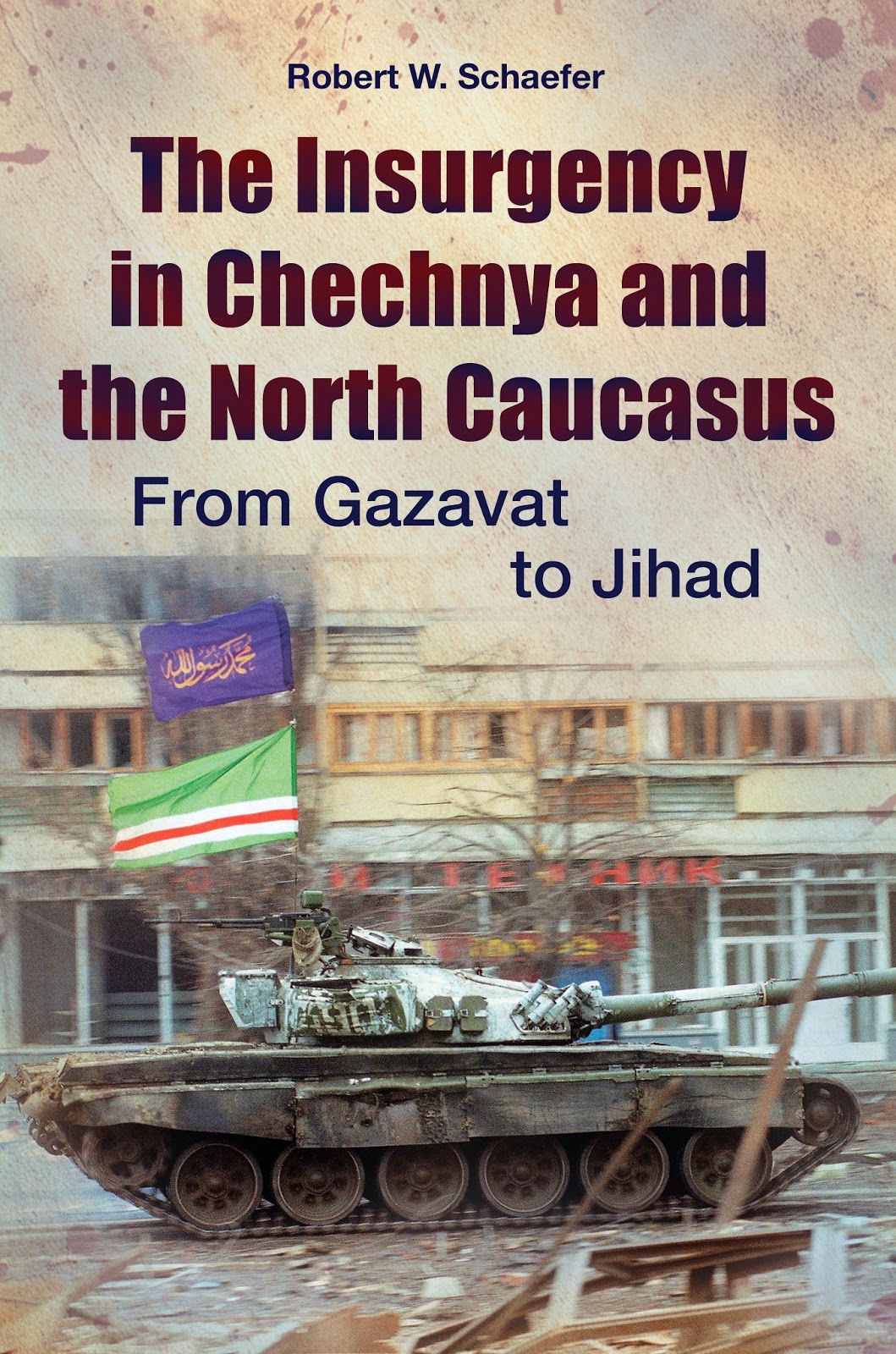
As NBC's Russian Security Analyst for the 2014 Sochi Olympics, I was asked during a recent interview what I thought the chances are that there would be no attacks during the games, and my answer was a quick and unequivocal “zero percent.” The best way to understand the threats facing the Sochi Olympics is to use some of the concepts discussed at length in my book The Insurgency in Chechnya and the North Caucasus; in particular the Most Dangerous Courses of Action (MDCOA) and the Most Probable Courses of Action (MPCOA). There will be an attack associated with the Olympics, but for it to be a “successful” attack (from the insurgents and terrorists points of view), it doesn’t have to occur anywhere near Sochi.

But before we talk about what the different groups operating in the North Caucasus might do, we have to first look at the situation from their point of view and see what targets would be available to them.

My initial assessment of security at the Olympics has remained unchanged, especially after having spent a few days in Sochi, Adler, and Krasnaya Polyana assessing the venues. Although it is not impossible for terrorists or lone wolves to strike the Games directly, security at the sporting events is very tight and it would require a significant amount of planning, coordination, and logistics to pull off any type of attack, much less a major one. And because there are plenty of “soft” targets that would yield the same desired outcome, I think it extremely unlikely that athletes or spectators will be in danger while at the Games themselves.

However, outside the venues is a different story. Metal detectors and security personnel screen everyone who enters a hotel, police and military patrols routinely check the perimeters, and a heavy static security presence in the city provides its own deterrent. However, a single committed terrorist could gain entry to any of these hotels. Restaurants, bars, and clubs (where large groups of people will inevitably end up each evening), have only the barest of security and are largely dependent on the ubiquitous police patrols to try and prevent would-be attackers from getting near them.

And while it’s necessary to present your credentials before boarding any train or bus that takes fans to any Olympic venue, the roads leading to the mountain venues are open to anyone—despite the traffic police stationed every 400 yards along the route—meaning that it would be relatively easy for a car full of terrorists to drive to Krasnaya Polyana (a stone’s throw away from Olympic hotels and restaurants) and target any large group on any given evening.  This is, of course, contingent upon two additional factors: any terrorists getting through the “Ring of Steel” surrounding the environs of Sochi, which extends about 4 hours in every direction around Sochi; and having established a pre-positioned cache of weapons and explosives within the area before the “Wall of Steel” was established.

The Caucasus Emirate (CE, also known as the Imarat Kavkaz, IK) is a dangerous organization, and parts of their organization have been responsible for some of the most infamous and horrific terrorist attacks in history: notably, the seizure of the Dubrovka Theater in 2002 (the Nord-Ost incident) and the Beslan School Shooting (2004) where more than 300 people were killed, most of them children and some attending their very first day of school. More importantly, by looking at some of their past actions, it's easy to see that it is entirely within the realm of possibility for them to conduct a high-profile attack. Two particular incidents described in The Insurgency in Chechnya and the North Caucasus indicate this threat: the assassination of Akhmad Kadyrov and the Third Battle of Grozny.  Both demonstrate the ability of the CE to plan well in advance, while the first is one of the best examples in history of a targeted assassination at a sporting event (burying the explosives in the concrete below the VIP bleachers and then waiting months until Kadyrov showed up for an event), the second shows that the CE knows how to effectively utilize caches in order to circumvent security forces and pass through “walls of steel” in order to later conduct devastatingly coordinated attacks within a “secure” area. It was, in fact, the Third Battle of Grozny that resulted in Chechnya achieving defacto independence from Russia from 1996-1999. This is the same organization that is responsible for the dual suicide bombings in the Russian city of Volgograd in December of 2013.

The same factors that made those incidents possible, most notably the lack of what I refer to as Civil Infrastructure (in the forms of extreme corruption, the high number of conscripts, and unprofessionalism in the security forces), as well as the access (provided by massive construction projects) are still extant right now at the Sochi Games.

Something will happen, but probably not in the direct environs of the Olympics. Nonetheless, Russia is just too big to protect everything, and if readers of the book will remember, it is standard procedure for insurgents to attack where government forces are weakest, while terrorist cells must attack targets that will get the most attention. With the eyes of the entire world now on Sochi, almost anywhere in Russia is a possible target for terrorism.


Robert Schaefer is a U.S. Army Special Forces (Green Beret) and Eurasian Foreign Area Officer. For over 25 years he has served in a variety of special units and participated in virtually every U.S. overseas operation since 1990. He has extensive experience with counterinsurgency and counterterrorist operations around the world and has lived and worked in many countries in Eastern Europe and Central Asia as a diplomat and adviser to foreign governments and militaries. He is uniquely qualified to analyze the conflict in the North Caucasus because of his first-hand experience planning and executing counterinsurgency and counter-terrorism operations in the Caucasus region. LTC Schaefer is the 2001 recipient of the U.S. Special Operations Command (SOCOM), and the Office of Strategic Services Society's Award of Excellence as the U.S. Special Operations Command Person of the Year for his historic achievements with Russian airborne forces. He obtained his MA from Harvard University's Russia, Eastern Europe, and Central Asia program, and is the host of National Public Radio's Memorial Day Special 2007–2012. He is a member of the Editorial Board for the Caucasus Survey, a consultant to several government agencies and a frequent commentator for news programs and seminars focusing on the North Caucasus insurgency. His critically-acclaimed book The Insurgency in Chechnya and the North Caucasus: From Gazavat to Jihad won multiple national awards and was named to Kirkus Reviews "Best of 2011," and the "Top 150 Books on Terrorism and Counterterrorism" by the journal Perspectives on Terrorism.


Friday, December 6, 2013

Remembering Nelson Mandela, 1918–2013

The passing of Nelson Mandela is sure to inspire a global outpouring of mourning, testimonials, and commentary, perhaps on a scale without precedent in the age of the Internet and social media. His life story and character have long moved and inspired many millions of people. Mandela received a life sentence for treason in 1964 for his anti-apartheid activism and spent 27 years in prison. After his release in 1990, he began leading negotiations for a peaceful end to apartheid with F.W. de Klerk, then-president of South Africa. In 1994, Mandela was elected president in the nation's first free multiracial elections. Shortly thereafter, he instigated a truth and reconciliation process that sought forgiveness in forging a new multiracial democracy.

Mandela stepped down from the presidency after one term and became a global statesman. He devoted his time over the next few years to peace negotiations in other African countries, charitable work, and advocacy for such causes as human rights, poverty eradication, and HIV/AIDS prevention. In 1993, Mandela and F.W. de Klerk, the last apartheid-era president, shared the Nobel Peace Prize. Mandela's leadership was not without criticism in some aspects, and South Africa today still struggles with inequality, corruption, and violent crime, while the African National Congress (ANC) he led is a divided party. However, he leaves behind a functional democracy and sub-Saharan Africa's largest economy—outcomes that were hardly assured in the last days of apartheid.

Mandela is without dispute among the 20th century's most significant, influential, and revered figures, and will be studied globally for many years to come. In South Africa he remains both Madiba (his Xhosa clan name) and "The Father of the Nation."

Wednesday, November 6, 2013

New Primary Resource Collection: Explorers of the American West

We are pleased to announce the addition of a rich collection of primary resources to our United States Geography Online Solution!

Sacajawea is depicted guiding the Lewis and Clark expedition through the Rocky Mountains in this painting.

Users have access to a plethora of fascinating and illuminating primary sources such as journal entries and artwork. The new collection includes:

  • 60 journal excerpts from some of the most notable explorers of the 19th century
  • 50 pieces of primary source media, which includes artwork from the expeditions, pdf maps, and photographs of journal pages
  • 6 interactive expedition maps that feature pop-up boxes with journal excerpts that correspond to locations on the maps. These maps are one-of-a-kind, produced in-house from coordinates found in the journals themselves, and only found at ABC-CLIO!
  • Timelines for each featured expedition with links to their corresponding journal excerpts
  • Essays describing each expedition
  • A feature story, “Ocian in View Celebrated,” that serves as our gateway to the collection and includes an Examine activity analyzing primary documents
  • Two lesson plans on the support site to accompany the collection in which students analyze primary documents: Concept of Place in the American West and Explorers of the American West and Native American
Click the linked text above to begin exploring these unique and informative resources.

Not a United States Geography subscriber? Sign up for a FREE 30-day trial and don't miss out on these one-of-a-kind interactive resources found only in ABC-CLIO Solutions!


Thursday, October 10, 2013

Congratulations to Our VOYA Five-Foot Bookshelf Featured Titles!

The VOYA Five-Foot Bookshelf is an annual collection featuring VOYA reviewers' picks for best books for professionals who serve teens. We are honored to see so many of our Libraries Unlimited titles make the list!


Adult Learners: Professional Development and the School Librarian
Carl A. Harvey II
978-1-61069-039-3
Managing Children's Services in Libraries, Fourth Edition
Adele M. Fasick and Leslie Edmonds Holt
978-1-61069-100-0
Integrating Young Adult Literature through the Common Core Standards
Rachel L. Wadham and Jonathan W. Ostenson
978-1-61069-118-5

Teen Talkback with Interactive Booktalks!
Lucy Schall
978-1-61069-289-2


Rainbow Family Collections: Selecting and Using Children's Books with Lesbian, Gay, Bisexual, Transgender, and Queer Content
Jamie Campbell Naidoo
978-1-59884-960-8
Library Leadership in the United States and Europe: A Comparative Study of Academic and Public Libraries
Peter Hernon and Niels Ole Pors, Editors
978-1-61069-126-0


View the electronic issue of VOYA here. Find the Five-Foot Bookshelf feature on pages 8 and 9.

Tuesday, October 8, 2013

Zoot Suit Riots

The following interview features Roger Bruns, historian and former deputy executive director of the National Historical Publications and Records Commission at the National Archives in Washington, DC. He is the author of many books, including Encyclopedia of Cesar Chavez: The Farm Workers' Fight for Rights and Justice; Negro Leagues Baseball; and Icons of Latino America: Latino Contributions to American Culture. He has written several biographies for young readers on such figures as Cesar Chavez and Martin Luther King Jr.  He is author of the forthcoming Zoot Suit Riots, part of the Landmarks of the America Mosaic series.


You have written a book to be published next spring by ABC-Clio on the Zoot Suit Riots in Los Angeles during World War II.  First of all, what are zoot suits? 

Although the exact origins of the zoot-suit are unclear, many Mexican-American youth in Los Angeles in the early 1940s adopted the so-called “drape” look worn by African-Americans they had seen in pictures and movies, especially in eastern cities, and, most especially, in Harlem. The jazz music and the jitterbug dance craze had made their way to the West Coast along with the clothes that spoke of youthful rebellion and urban identity. There was the oversized coat with broad shoulders and ballooned and pegged pants, large broad-brimmed hat, with a watch chain often dangling down the side. Thick-soled shoes called Calcos added to the look.

Mostly, the youngsters were Mexican-Americans born in the U.S. to parents who had immigrated. Walking around the streets wearing the drapes with friends from their neighborhoods gave them, both young men and women,  a group identity – admiration from some in their own community; disgust and ridicule from others, especially Anglos.  Many young men took on the name “pachucos” and women “pachucas,” terms of uncertain origins that mostly came to mean those in adolescent gangs wearing zoot-suits. Not every pachuco wore a zoot suit, however, and certainly most members of the Mexican-American community did not consider themselves part of the pachuco rage. Indeed, the parents of many of those adolescents involved were unquestionably anxious and concerned about the fidelity of their sons and daughters to this new cultural phenomenon. 

But the zoot-suit rage grew. Pachucos intermixed English and Spanish with slang they called “Chuco,” much of it from a Caló dialect that could be traced to early Spanish wanderers and outcasts. They gathered in groups that carried names of Mexican-American neighborhoods 39th Street, White Fence, Alpine Street, and Happy Valley.

What led to riots?

Most of all, we have to remember the entrenched prejudice against Mexican-Americans in this period. It was not only invidious but out in the open for all to see. Many public facilities were closed to Mexican-Americans. Some churches would allow Mexican-Americans inside only on certain days. Many cemeteries, even those publicly operated, reserved special sections specifically for Mexican-Americans, thus separating them in death from Anglos just as they had been during life. Some theaters did allow Mexican-Americans and Afro-Americans access but only on certain nights. There were actually signs that read “No Mexicans or Dogs Allowed.”

Mexican-Americans read stories in Los Angeles newspapers that called them “undesirables.” They were accused by law enforcement officials and political leaders of being inclined to engage in criminal activities and were, therefore, a threat to law and order. When arrested for petty crimes, many were subjected to what was euphemistically called the “third degree” – from beatings with rubber hoses to “three-day hunger tests.”
The Zoot Suit Riots are inextricably linked to the infamous, so-called Sleepy Lagoon murder in August 1941 southeast of Los Angeles.  The Sleepy Lagoon was a reservoir used to irrigate crops and a swimming hole and meeting place for many Mexican-American youths. At a party at a nearby house on August 1, a young man named Jose Diaz was found dead after a brawl among a group of youngsters from the neighborhood around 38th Street and some youths from other neighborhoods. The Los Angeles Police Department, in a zealous demonstration of combating juvenile delinquency, rounded up in a dragnet more than 600 young people, mainly those who wore zoot suits. Unable to tie any single individual to the crime, a grand jury indicted over 20 youngsters for murder, an unprecedented and outrageous overreach. In the subsequent trial, marked by unbridled bias and judicial misconduct by the judge, most were convicted of first or second degree murder. They would later be released on appeal after serving significant time in jail.
Within months of the convictions, Los Angeles erupted in a riot. On June 3, 1943, with tensions escalating between U.S. sailors stationed in Los Angeles and Mexican-American zoot suiters, some 50 sailors on shore leave ventured into Mexican-American neighborhoods armed with clubs and other weapons. Their mission, supposedly in retaliation for earlier attacks on servicemen, was simple – beat up and rip the clothing from any “zoot suiter” they could find. For several days, sporadic attacks by servicemen against Mexican-Americans threw parts of downtown Los Angeles into chaos and rioting. For a week, sailors and other servicemen dragged kids off streetcars, from restaurants, and out of movie theaters. The boys were beaten and stripped of their zoot suits, a kind of ritualistic cultural humiliation.

Thousands of white civilians egged on the servicemen. At one point at the end of the week of carnage, an estimated 1000 servicemen rampaged through the Mexican district, storming into bars, penny arcades, theaters, stores, and dance halls with relative impunity. A number of taxi drivers joined the fun, offering free rides to servicemen and civilians to the riot areas. .

Eventually, with news of the riots reaching the national press and with First Lady Eleanor Roosevelt referring to the spectacle as race riots against Mexican-Americans, local and military police eventually restored order. Of the many hundreds of  individuals herded off to jail, almost all were Mexican-Americans, the targets of the attackers.  They were mostly charged with disturbing the peace.

In the end, the Los Angeles City Council banned the wearing of zoot suits on Los Angeles streets.


What was the highlight of your research? In the course of your research, what discovery surprised you the most?

Records at the National Archives and Records Administration (NARA) in College Park, Maryland, at NARA’s records center in Riverside, California, and at the Franklin Roosevelt Library in Hyde Park, had a wealth of original documents about the deep concern of the U.S. government that the trial and riots were damaging the country’s relations with Mexico and Latin America during wartime. In late 1942, the Office of War Information (OWI), an agency designed to coordinate news releases favorable to U.S. interests during the war, worried that open hostility toward Mexican-Americans in Los Angeles was being exploited by the enemy. Axis propaganda sent to the U.S., Mexico, and other Latin American countries attacked as a sham U.S. claims that it was a democratic nation free of the persecution of minorities. The OWI sent Alan Cranston, a former journalist who would later become a U.S. Senator from California. Cranston met managing editors and publishers of all four of the major newspapers in the city encouraging them to stop slandering Mexican-Americans in their articles. He also encouraged city officials to prepare a plan to help ameliorate the conditions under which Mexican-Americans were struggling in the city.

Also State Department officials had numerous communications and face-to-face meetings with Mexican diplomatic figures trying to temper the anger and suspicions aroused by the Sleepy Lagoon trial and the riots.

What effects did the Sleepy Lagoon trial and the Zoot Suit Riots have on the Mexican-American community and how are these events from 60 years ago relevant today?

So outrageous had been the treatment accorded to Mexican-American citizens in Los Angeles during wartime that activists, reformers, and the immigrant community itself  began to fight back, to make demands, and seek ways to come together to force change against the kind of  systemic prejudice and  dehumanization so evident in the trial and the riots.

In coming years organizers would win a landmark case of Mendez v. Westminster (1947) that would outlaw segregation of Mexican-Americans in public schools. In the same year, reformers founded the Community Services Organization (CSO), a civic-action group dedicated to promote community improvement, awareness of citizenship rights and responsibilities and to fight against human and civil rights abuses. It would fight discrimination in housing, employment, and education; promote political involvement; and establish self-help programs.

Throughout the 1960s and early 1970s, the so-called Chicano Movement produced a new generation of activists and leaders who brought to national attention a variety of issues vital to the Mexican American community and sought to remedy the ills of discrimination and powerlessness through direct political action.  In the early 1960s, Cesar Chavez, a zoot-suiter in his youth, began his historic fight to establish a union of farmworkers. One of his friends and allies, Luis Valdez, who would later be called by many “the Father of Chicano Theater, wrote a play called  Zoot Suit that opened on Broadway in 1978. It related the events of the early 1940s to the continuing struggles of Mexican-Americans and played for the first time in Mexico City in 2010, the same year that the state of Arizona passed draconian legislation against immigration. As the nation continues to grapple with such issues as immigration, fair employment and educational opportunities, and the many aspects of civil rights for Latinos, the story of the Zoot Suits Riots remains a compelling reminder of how far we have come but how daunting remain the challenges.